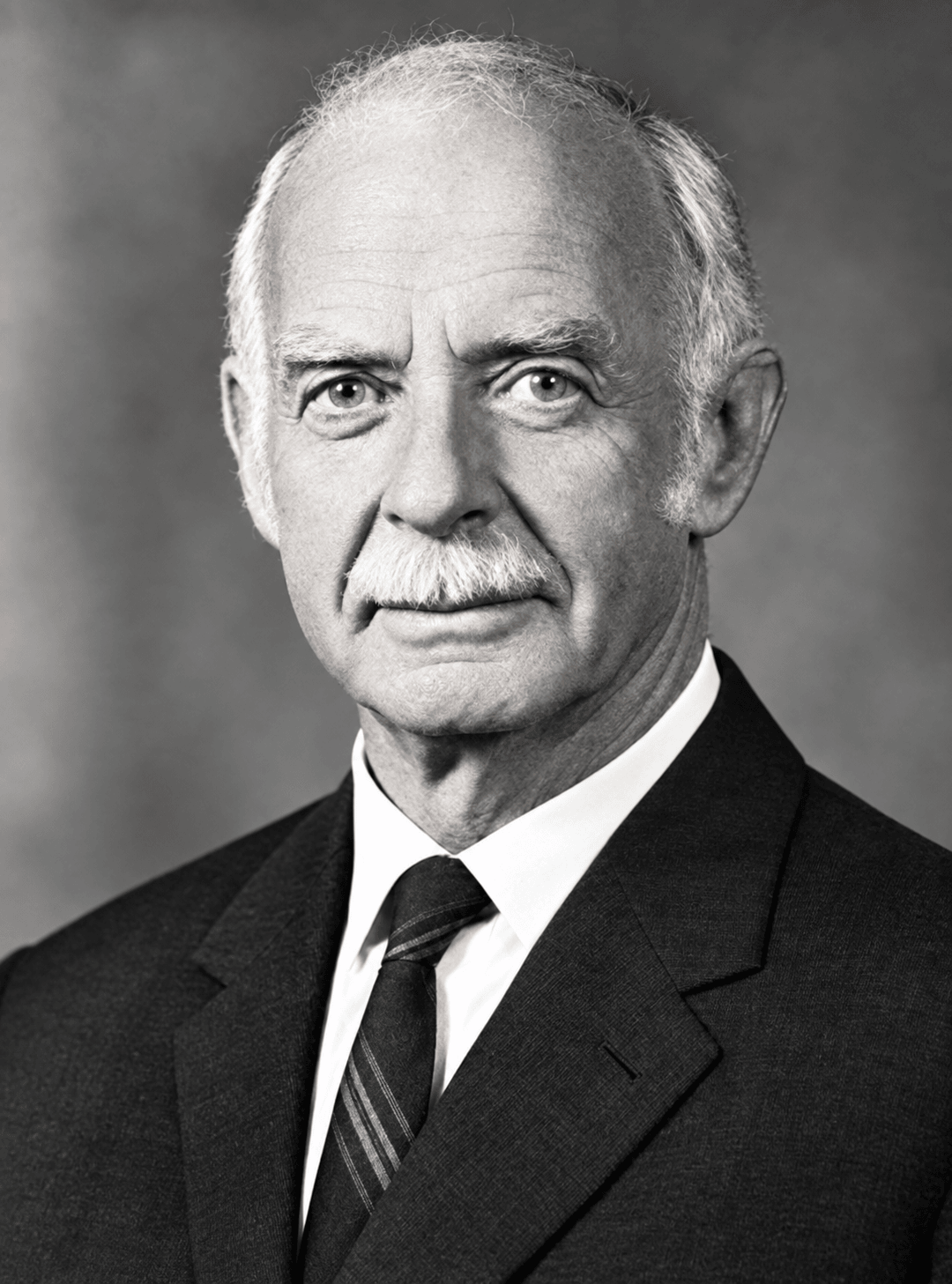
Professor Lindsay Heathcote Briggs
Hastings Boys' High School 1918 - 1920
Chemist
Born in Hastings on 3 January 1905, Professor Briggs began his educational journey at Hastings District High School, the forerunner of Hastings Boys' High School. During his school years, he demonstrated an exceptional academic ability and a passion for learning that set him apart from his peers. Historical records note that he was recognised as Dux of the school in both 1919 and 1920 and earned a prestigious Senior National Scholarship, achievements that reflected both his intelligence and determination.
Those early accomplishments were merely the foundation for what would become one of the most distinguished scientific careers in New Zealand history.
After leaving Hastings, Professor Briggs continued his studies at Auckland Grammar School before attending Auckland University College, where he completed a Master of Science degree. His academic promise led him to the world-renowned University of Oxford, where he completed a doctorate under the celebrated chemist Sir Robert Robinson, working on the complex challenge of determining the structure of strychnine.
Returning to New Zealand in 1933, Professor Briggs joined the University of Auckland as a lecturer in chemistry. Over the following decades he rose through the academic ranks, eventually becoming Professor of Chemistry and later Professor Emeritus. Along the way, he established one of New Zealand’s earliest and most influential research schools in chemistry, mentoring generations of scientists and helping place New Zealand science on the international stage.
Professor Briggs became internationally renowned for his groundbreaking research into the chemistry of New Zealand’s native plants. His work expanded scientific understanding of natural compounds found in our indigenous flora and contributed significantly to the development of organic chemistry. Throughout his career he published extensively, earned international respect, and trained many young researchers who went on to become leaders in science throughout the Commonwealth.
The honours he received reflect the extraordinary impact of his work. In 1942, he was elected a Fellow of the Royal Society of New Zealand, one of the highest distinctions available to a scientist in this country. In 1943, he was awarded the prestigious Hector Medal, recognising outstanding original research of international significance. He later received the ICI Prize and Medal in 1949 and the Queen Elizabeth II Coronation Medal in 1953.
His leadership extended far beyond the laboratory. He served as President of the Royal Society of New Zealand, President of the New Zealand Institute of Chemistry, and President of the Auckland Institute and Museum, helping shape the future direction of science and education throughout the nation.